 Chinese (Simplified)
 Arabic
 Dutch
Dutch English
 French
 German
 Italian
 Portuguese
 Russian
 Spanish
How To Choose Dental Bibs? The Ultimate Buyer’s Guide!
Meta Description
Buying protective dental bibs requires understanding materials, size, absorbency, and amount. Choosing appropriate products is crucial.
Introduction
Are you in need of protective barriers for purchase? Read this extensive reference for all information about dental bibs. Important considerations for buying include what materials are utilized, size, absorbency, and the amount required. This guide will answer all your questions and offer best tips.
The Dental Bib Blueprint
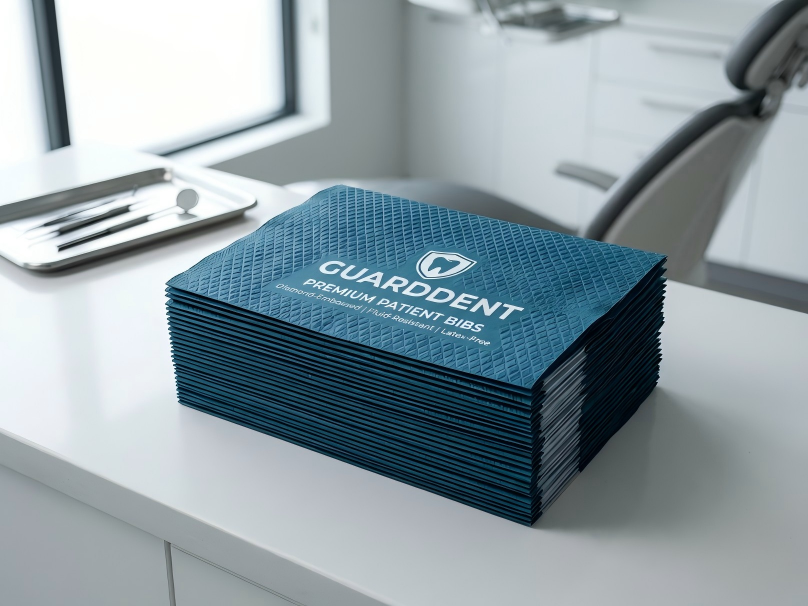
Are you in need of Patient Bibs for purchase? Read this extensive reference for all information about dental bibs – frequently asked questions and tips for choosing the appropriate product.
Important considerations for buying dental bibs include what materials are utilized in their being constructed, size, absorbency, and the number required. If you are interested in purchasing a dental bib, this guide will answer all your questions and offer you the best tips for making a purchase.
Protective barriers are the key to a clean and comfortable patient, or to a rained-on clinical environment. This breakdown in detail helps you to understand exactly what specifications you need to meet for the most effective infection control and also to satisfy the patient.
Actionable Summary
| Material | Construction |
| paper | 3-ply |
| polyethylene | 1-ply |
- Material Construction:When performing high moisture procedures, use three-ply paper (tissue) with one-ply polyethylene (PE) film backing. This technique helps to keep the fluid from ‘strike-through’ onto clothing the patient wears. Two-layer paper+1 layer film with extra stretch strength with high absorbency.
- Edge-Bonding:For efficient liquid movement and to prevent plastic backing from peeling free look for embossed horizontal edge and advanced edge-bonding technologies.
- Sizing & Dimensions:Opt for standard 13 x 18” size when it comes to general dentistry. Extra lengths should be ordered from the bariatric clinics.
- Color Optimization:Make use of colors such as dark color instead; tattoo artists are advised to use dark colors to reduce eye strain caused by the use of high-intensity lights. Set up color coding for the dentist office for the way that hygiene and surgical dates are booked.
NOTE- If you are an eco-friendly practice, consider reviewing bamboo products for increased strength and biodegradability. Available for four levels of quality Comfortable and soft fabric.
So, What Are Dental Bibs?
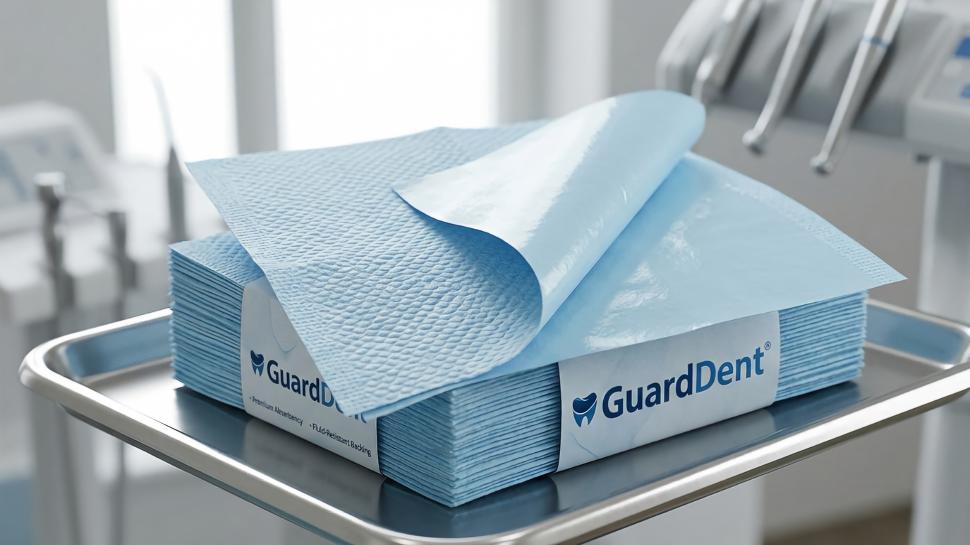
Dental bibs are single use, paper or plastic bibs when you are getting dental care and you need protection for your clothes from contamination. They are vital precautions used in medical, cosmetic, and dental practices as a way to protect from splashes, harsh chemicals, and debris.
Dental bibs can be made of paper or plastic materials. Paper bibs are more frequently used and consist of absorbent layers of paper or layers of polyethylene making them waterproof.
Plastic bibs are more fluid resistant, but less absorptive. This unique blend allows liquids to be absorbed by the porous material of the bib and completely away from the patient’s skin and clothing. Waterproof and leak-proof.
| Feature | Paper-Only Options | Paper + Polyethylene Options |
| Fluid Resistance | Low | Absolute Moisture Barrier |
| Absorbency Level | High | High |
| Delamination Risk | N/A | Low (if edge-bonded) |
Prerequisites For Purchasing
It is important to know your patient count, the most common procedures treated, and the rate in cases per month in order to upgrade your clinical inventory. You do not need any special tools in order to make this selection.
It will only take 10 minutes to look and identify the quantity and ply of your existing stock, along with the GSM (Grams per Square Meter) and you will have the baseline you need.
This information can be shared with best results from any office manager or procurement officer on metrics such as fluid output during a session and patient feedback on a level of comfort.
How To Choose Dental Bibs?
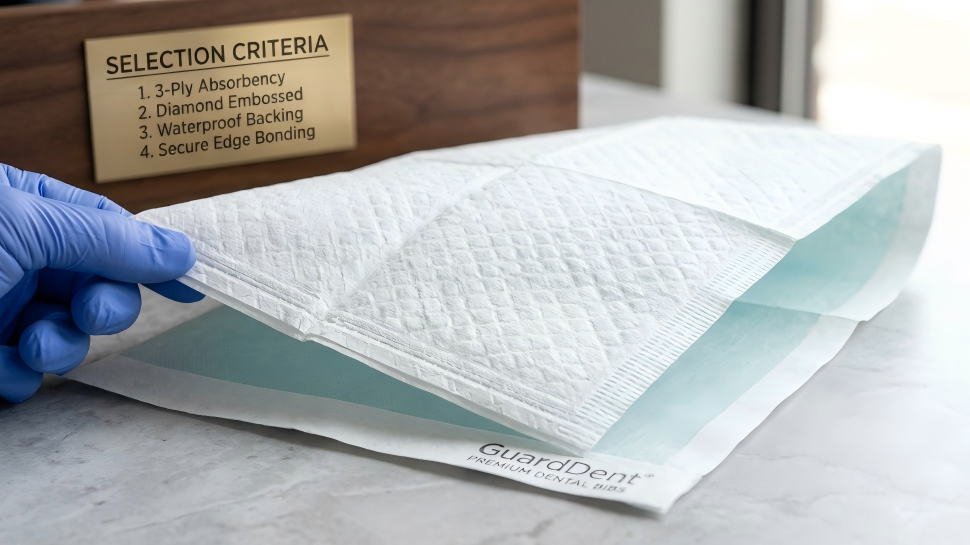
Look at the materials, size, absorbency and amount required when buying dental bibs. One must also review and see the rating of the product to determine its quality and reliability. These seven important steps will ensure you get barriers that are the most effective for your practice.
| Selection Criteria | Details to Consider |
| Material Build | Ply count, paper vs. plastic ratio |
| Absorbency | Capacity to hold procedural fluids |
| Edge-Bonding | Prevents delamination and tearing |
| Dimensions | Standard vs. extra-long for bariatrics |
1. Evaluate Your Procedure Requirements.
The initial step is to evaluate your procedure needs. The absorbency rate of disposable protective equipment must be suitable to the amount of moisture that you encounter in your most frequent procedures. Your clinicians use heavy ultrasonic scaling and have to work with a lot of cooling solution liquids and water spray. Under these conditions, a standard, low tier bib will not work.
- Analyze Day To Day Routine: – Check procedure types, and average fluid output to find standard or high absorbency bibs.
- Volume Limits:a simple two-ply bib may only be able to hold a few ml (approx. two teaspoons) of fluid before failure and pooling.
- The Gold Standard:A three-ply tissue construction, which is exponentially superior in fluid handling, keeps patient’s clothing protected from splashing and irrigation fluids.
- Porous Trapping:A fluid capacity which captures the fluid in the various (usually 16-19 GSM) layers of porous tissue.
- Moisture Barrier:The polyethylene backing is an absolute moisture barrier against bacteria; it stops the bacteria from cross-contaminating.
- Reduction Of Surface Tension:The paper removes water from the top surface quick and fast, so it does not pool, and runoff is dangerous.
2. Cross-Check Construction And Edge-Bonding.
You should ensure that the edge-bonding technology of the Tray Cover and the texture of the emboss surface is working. Edge-bonding is one of the important manufacturing processes. The backing will be polyethylene that will delaminate or peel off the tissue layers without it.
- Embossing Patterns:Make sure there is a horizontal embossing pattern and sealed edges are present to prevent coming apart of the layers and prevent liquid from seeping directly onto the patient.
- Delamination Risks:Low-quality, budget bibs are usually cut out in the same manner and do not use the edge-bonding procedure with the cost of manufacturing.
- Clip Strength:Functional embossed texture (such as a diamond or waffle pattern) offers more structural integrity that allows for it to not shred immediately if used with metal Bib Holders.
- False Economy:Clinicians are resorting to using cheap materials which means that two, three, or more bibs are used on each patient to get through one appointment.
- Professionalism:Quality construction means a cleaner, more professional working environment – you can focus 100% on the patient, not on mopping up accident spills.
3. The Correct Dimensions.
Most dental bibs are a single size around 13 inches x 18 inches. Most patients can use this size which equates to about physical coverage of 33cm x 45cm. Specific length needs, however, may vary according to your patient population.
- Standard Sizes:Assess the standard size 13 X 18 vs your market then determine if you require additional long sizes.
- Bariatric Considerations:If you work with larger patients, a traditional ‘bib’ will bob up and down and expose clothes to irrigants such as sodium hypochlorite. Extra-long Bibs cover full chest and lap.
- Unrestricted Movement:need to consider size so it covers patient but not so bulky it interferes with the clinician’s work area during procedure.
4. Select Colors Depending On The Type Of Practice, According To Step 4.
It is not just a matter of complementing your office interior – color selection actually serves a purpose as it makes things easier for clinical functions and improving visual contrast during complex activities.
- Color Coding And Procedure Mapping:Colors can be used as per the contrast needs, such as tattooing or a color coding can be maintained for hygiene or surgical procedures.
- Tattoo Artists And Estheticians:The black and dark colored bibs are recommended for tattooists and estheticians as they help to lessen eye strain from the heavy lights used for tattooing and provides a high contrast background to locate the needles and the ink head.
- Visual Organization:it will help you to organize the work in your very busy dental office if you are coding in blue basic hygiene work and green surgical extractions. Your personnel will be able to have a quick reference on who is where and what is going on in every room by simply taking a look at the patient.
- Dental Restrictions:Dark colors are not generally desirable in a general dental practice as bright overhead dental operating lights make it more difficult to view any contrast with teeth and gums.
5. Consider Eco-Options
The environmental consequences of the products used must be taken into account. The common formula of wood pulp paper and non-breathable polyethylene plastic makes it very difficult to process the product in a typical municipal recycling plant.
- Biodegradable Options:If your clinic is aiming to minimize environmental impact, while maintaining strength, consider looking into biodegradable options that involve bamboo.
- Tensile Strength: – Bamboo is stronger than traditional wood pulp, while also being biodegradable at a much quicker rate. You get a more responsible, high-quality product that is responsible degradation in landfills.
- Patient Demand:By switching to eco-friendly alternatives, you can meet the increasing demand of your patients for a greener healthcare environment.
6. Check The Specification Of The Material (GSM/Thickness)
Knowing exactly what goes into the making of your clinical product supplies means that you have medical grade items instead of commercial, paper goods items. The heaviness and thickness of the materials are directly related to the patient’s comfort and fluid retention.
- Tissue Weight:Make sure the paper is at least 16-19 GSM (Grams per Square Meter). Lower GSM paper layers may scratch or feel abrasive when they come in contact with the patient’s sensitive neck zone resulting in discomfort.
- Film Weight:Protective PE film backing should be in the range of 12 GSM – 14 GSM. This means it will be waterproof a hundred percent, but it won’t make the drape stiff.
- Comfort Levels And Closeness To The Body:If a heavy, impermeable fabric (like plastic) is used in the back of the bandage, it can become uncomfortable and cause sweating in warm environments as the Polyfilm traps heat between the bandage and the horse’s skin. By imposing high quality, lightweight PE film, this can be reduced.
7. Evaluate Packaging And Bulk Supply Dynamics
The quantity of dental bibs per pack may be different for various brands and products. The Bibs come in packs with mostly 125 – 500 bibs in a pack. It is important to know how these supplies are packaged and shipped because it will impact your overheads, storage space and inventory workflow. Sterilized vacuum packaging.
- Packaging Density:High quality bibs are well often tightly blooded in sterile sleeves to 125 pieces, four sleeves per master carton (500 pieces).
- Storage Conditions:Make sure that wherever you store it is not humid, not in corrosive gases, and is not damp, and that the temperature should not be above 80% humidity. This helps to ensure that the paper tissue will not get moist and soggy or deteriorate before it’s used.
- Testing:Purchase a small sample pack of three-ply edge bonded bibs from a good supplier. Do some serious testing of the clips on your own metal clips in your practice before placing large bulk orders.
The Following Are Common Mistakes And Troubleshooting Tips
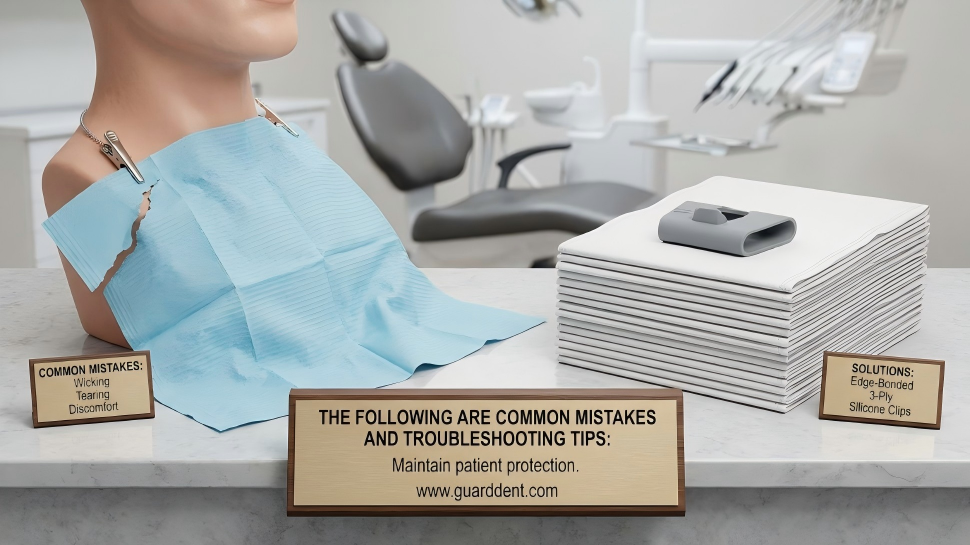
Despite excellent stock, problems can arise during clinical operations with functional groups. If you are aware of how to troubleshoot these types of physical barrier failures, you can maintain patient protection level.
- Wicking Behind Neck:One of common dental hygienists’ complaints is fluid used in the procedure running horizontally along the raw edge of tissue and running down the back of the neck. This is caused 100% due to improperly sealed edges at manufacture. Solution: Correct this immediately by wearing edge-bonded bibs which seal all around the perimeter. Don’t attempt to pull the bib more snugly to the collar – this could just provide a straight downpour of water down the skin. Soft and non-irritating, it is acceptable to both the elderly and children.
- Bibs Tearing Under Metal Clips:Budget bibs are prone to tearing when applied using heavy metal, alligator-style clips as the thin, unbonded paper of the bibs is being shredded by the sharp sides of alligator clips. Solution: change to a “three-ply tissue” that’s heavier, has a horizontal waffle or diamond embossed surface, and provides huge localized strength. Instead, use softer silicone rubber bib holder, which have a firm grip but not a biting grip, or do not bite into the paper matrix.
- Patient Sweating And Discomfort:As described, a non-breathable plastic backing is keeping use disadvantageous and at the very least causing excess sweating in lengthy surgical therapies or in warmer climates. Solution: Find the right ambiance inside, use your bib strategically, loosen up the bib for part of the day, and do not purchase too thick and too poor-quality backing plastic.
- Scratchy, Rigid Feel To The Skin:When patients complain about their purchases feeling “paper thin” (low GSM), then it is because of the abrasive feel on their skin. Increased info: If feasible invest in higher GSM virgin tissue with a small increase in supply costs. Your patients will appreciate the high quality from the beginning and therefore get a better perception of the quality of care offered in your practice.
People Also Ask
What Size Does Dental Bib Come In?
Dental bibs are generally one size, around 13″ x 18″. This size will work for most patients and offer plenty of coverage for the upper lap and chest.
Are Dental Bibs Disposable?
Yes, dental bibs are intended for disposal after use, and can be cross-contaminated. Dental bibs should be discarded in a disposable trash bin.
How Many Dental Bibs Are There In A Pack?
This varies according to the manufacturer and product and the number of dental bibs in a pack may change. Typically, packs are 125 to 500 bibs.
Can Dental Bibs Be Used For Other Purposes Besides Dentistry?
Yes, dental bibs may be used for other health or medical activities that require biofluid protection for clothing or surfaces. They are much used by tattoo artists, cosmetologists and nail technicians.
Can Dental Bibs Be Recycled?
Dental bibs must be thrown in the trash – they cannot be recycled because they are made from a combination of materials. The bonded paper and polyethylene plastic combination necessitates industrial separation processes and special machinery that can’t be provided by most municipal recycling facilities.
What Dental Bibles Should I Purchase?
When buying dental bibs, think about the materials, size, absorbency, and number of bibs you require. Another important factor to look for in a product is their reviews and ratings that can be used to help you determine their quality and reliability. Check ply count and condition of edge-bonding technology each time.
Why Is Tattoo Artist Using Black Bibs?
The dark color significantly diminishes eye fatigue caused by the high light intensity of inspection lamps, a favorite choice for tattoo artists. Moreover, black will create a fantastic contrast for the metal needles and the bright ink caps, and it will easily camouflage any ink stain, thus creating a neat look.
What To Do Next?
The next step is to go through your existing supply room inventory physically after you have got a thorough understanding of the barrier technology in your room.
Review the pli count, standard of edge-bonding and precise bib dimensions used in the bibs presently utilized. Does anyone in clinical staff discuss with them whether the current bibs are failing when they are having high fluid procedures? Do your patients complain about a scratchy, discomfort paper feel?
After determining the vulnerabilities in your medical supplies, and contact good medical manufacturers. Purchase a sample pack of three-ply, heavier emboss, edge-bond, Disposable Instrument Trays. 15 years of experience in the production and export of dental consumables.
Use your own water pressure limits, your own bib clips, and your own equipment when running clinical tests. Before going in for bulk, test the actual performance differences in the real world. This will update this critical piece of protective gear, lower clean up time, and keep your patients compliant and comfortable.
Conclusion
After determining vulnerabilities in your medical supplies, contact good medical manufacturers. Review the ply count, standard of edge-bonding, and precise physical dimensions. Test the actual performance differences in the real world before buying. Purchasing protective dental bibs will update this critical piece of gear. Purchase from GuardDent to keep patients completely compliant and comfortable.